


The short answer is yes. The United States allows dual citizenship. U.S. law does not require naturalized citizens to renounce their original nationality or surrender their foreign passports.
You can legally hold both citizenships at the same time.
However, this depends not only on U.S. immigration laws. It also depends on the laws of your home country.
What does U.S. law say about dual citizenship?
Technically, nothing in the Immigration and Nationality Act (INA) explicitly prohibits a U.S. citizen from holding another country’s citizenship.
In fact, Section 101(a)(22) of the INA defines a “national of the United States” as follows:
- A citizen of the United States, or
- A person who, though not a citizen, owes permanent allegiance to the United States.
The Supreme Court reinforces this stance. In the landmark 1952 ruling Kawakita v. United States, the Court stated:
“A person may have and exercise rights of nationality in two countries and be subject to the responsibilities of both.”
This means the U.S. legally recognizes and protects dual citizens. However, it also means that you must follow the laws of both nations.
Under this legal framework, the U.S. tolerates and recognizes dual citizenship in the following scenarios:
- By birth: People born on U.S. soil to foreign parents or born abroad to at least one U.S. citizen parent.
- By naturalization in the U.S.: Green card holders who become U.S. citizens without giving up their original passports.
- By naturalization abroad: U.S. citizens who acquire a second nationality in another country.
Furthermore, U.S. law does not limit the number of citizenships one can hold. You can absolutely obtain another citizenship after becoming a U.S. citizen.
The Oath of Allegiance: How does it affect your nationality?
The oath creates significant confusion during the naturalization process. During the ceremony, you swear to:
“Absolutely and entirely renounce and abjure all allegiance and fidelity to any foreign prince, potentate, state, or sovereignty.”
At first glance, it sounds like you have to give up your original citizenship. However, in practice, this language is purely symbolic. Taking the oath does not cancel your previous citizenship.
The U.S. Department of State clarifies that a foreign citizen does not have to choose between their nationalities.
According to U.S. law, you retain all the rights associated with your other nationality. This includes voting and participating in your home country’s political process as long as local laws allow it.
Which countries allow dual citizenship with the U.S.?
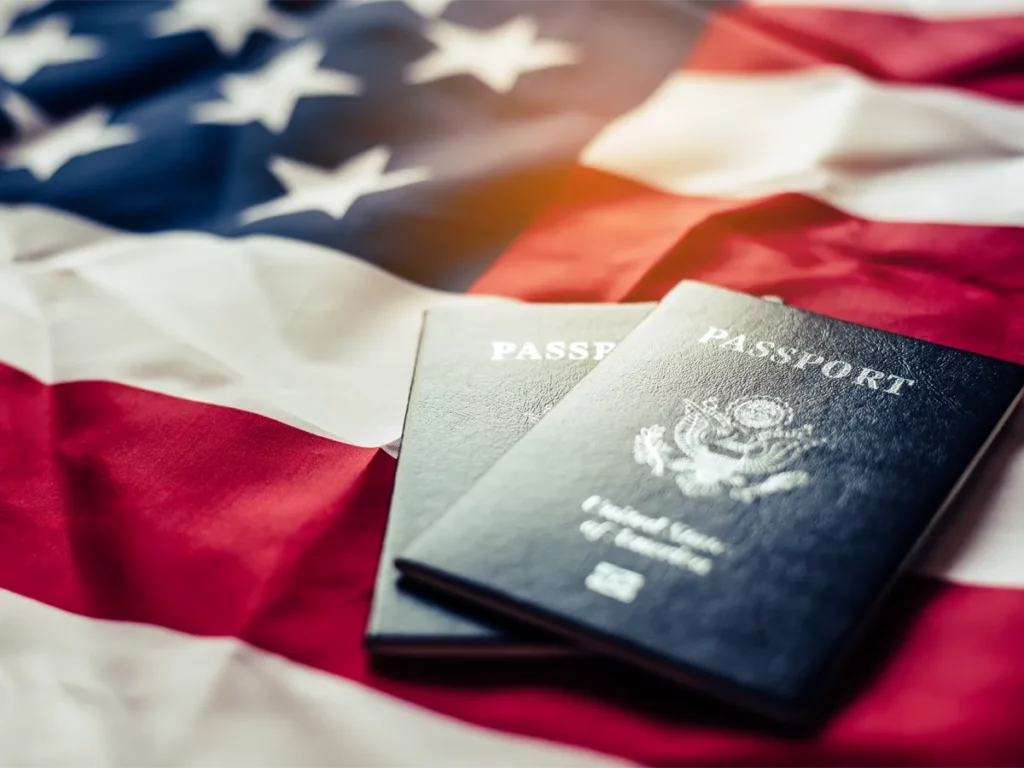
Whether you can hold dual citizenship with the United States usually depends on your home country’s laws.
As of 2026, 75% of countries recognize dual citizenship, while some strictly forbid it.
Under international law, countries take one of three positions regarding U.S. naturalization.
- They allow it with no restrictions.
- They allow it under strict conditions or procedures.
- Or, they ban it outright, which triggers the automatic loss of your original nationality.
Below, we break down the status of countries with the highest immigration flows to the U.S.
Note: There is no global treaty or universal, unchanging list for dual citizenship. Immigration laws are complex and frequently change—just look at the recent 2025 and 2026 legislative debates.
The following classifications rely on current official sources. However, I highly recommend checking with your country’s embassy or consulate before applying for naturalization.
Countries that allow dual citizenship with U.S
Most Latin American and several European countries allow you to acquire U.S. citizenship without losing your original rights.
You don’t need to go through any extra paperwork to keep your status.
| Home Country | Legal Notes & Conditions |
| Mexico | Under the 1998 Law, you keep your Mexican nationality when naturalizing in the United States. Note: You will not be eligible for certain public offices (like the Presidency). |
| Canada | Allowed since 1977. You do not need to register it with the Canadian government when becoming an American. |
| Colombia | Constitutionally recognizes dual citizenship. It does not require notification procedures at the Consulate. |
| Peru | You keep your nationality as long as you do not sign an express renunciation before the Peruvian State. |
| Argentina | Nationality is irrevocable by law. You keep all your rights and obligations for life. |
| Dominican Rep. | Allowed since 1994. You can exercise dual citizenship without administrative restrictions. |
| Ecuador | The 2008 Constitution protects the right to dual nationality regardless of the country of naturalization. |
| Brazil | 2023 Amendment: Brazilians no longer lose their nationality when voluntarily naturalizing in the U.S. |
| Germany | June 2024 Law: The requirement to request prior permission (Beibehaltungsgenehmigung) was eliminated. |
| United Kingdom | Allows multiple nationalities. It does not require informing the Home Office about your new U.S. passport. |
Countries that allow it with restrictions
These countries require a consular procedure, prior permission, or specific conditions.
If you become a U.S. citizen without meeting these requirements, your home country could revoke your passport.
| Home Country | Mandatory Procedure to Keep It |
| Spain | You have 3 years to declare your intent to keep your nationality at the Consulate after naturalizing in the U.S. (Art. 24 Civil Code). |
| Cuba | You do not lose your Cuban citizenship when you naturalize. However, Cuba does not recognize your U.S. citizenship on its territory and forces you to use a Cuban passport to enter and exit. |
| Philippines | Filipino citizens who naturalize in the United States automatically lose their Philippine citizenship. But you can “recover” it thanks to Republic Act 9225. |
| South Africa | You must get a “Letter of Retention” from the South African government before naturalizing in the U.S., or you lose your nationality. |
| South Korea | You must sign the “Pledge Not to Exercise Foreign Nationality” in Korea within the first year. |
| El Salvador | Only Salvadorans by birth can have dual nationality. Naturalized Salvadorans lose it when becoming U.S. citizens. |
| Honduras | The law allows it only through treaties. In practice, it is tolerated for native-born Hondurans, but it is a legal gray area. |
| Turkey | You must inform Turkish authorities and get an official permit for them to recognize your dual citizenship status. |
| Egypt | Requires permission from the Ministry of Interior. If you naturalize in the U.S. without this permit, you automatically lose your Egyptian citizenship. |
| Chile | Allows dual citizenship. However, it requires keeping your consular registry updated to exercise rights like voting from abroad. |
Countries that do not allow dual citizenship
These nations’ constitutions strictly forbid dual allegiance. Taking the U.S. Oath of Allegiance automatically revokes your original nationality.
| Home Country | Legal Notes & Consequences |
| China | The government does not recognize dual citizenship. Chinese nationality is automatically revoked when getting a U.S. passport. You may also be banned from receiving a Chinese visa or even entering the country at all. |
| India | Strict prohibition. When becoming American, you must hand over the Indian passport (you can opt for the OCI card, which is residency, not citizenship). |
| Japan | The Nationality Law forces you to choose one and formally renounce the Japanese one before the government. |
| Singapore | Zero-tolerance policy. Adults who acquire another citizenship automatically lose the Singaporean one. |
| Netherlands | General rule of automatic loss, with very rare exceptions (such as being married to a Dutch citizen). |
| Austria | Lost at the exact moment of naturalization, unless a very hard-to-get exceptional permit was obtained. |
| Saudi Arabia | Total prohibition. Acquiring a second citizenship without permission carries severe legal sanctions. |
| Malaysia | The constitution orders the automatic revocation of the citizenship of those who voluntarily acquire U.S. citizenship. |
| Indonesia | Dual nationality is not recognized for adults. It forces you to give up the Indonesian one. |
Important Notice: Regardless of your home country’s stance on dual citizenship, the U.S. government currently enforces restrictive policies and processing suspensions for citizens of 19 high-risk countries.
If you are originally from one of these countries, it could affect your naturalization process.
Obligations of dual citizens in the United States
In practice, having dual citizenship means taking on double the responsibility. Just as you get to keep the rights and benefits of your home country, you also have to answer to U.S. laws.
If you choose to become a naturalized citizen, the U.S. government will expect you to follow these five non-negotiable rules:
1. Respect the U.S. Constitution and laws.
When you take the oath, you commit to following federal and state laws at all times.
Being a citizen means that U.S. law takes precedence over the customs or regulations of your home country while you are inside the U.S.
2. Mandatory use of a U.S. passport
By law, you must enter and exit the United States exclusively using your U.S. passport.
Attempting to cross the border or pass through U.S. airport security with your other passport or old green card is an immigration violation.
3. You must pay U.S. taxes for life
Unlike most other countries, the United States taxes its citizens based on nationality rather than residency.
Therefore, you must file a tax return with the IRS every year, no matter what country you live in. You may also be required to report any foreign assets or income you acquire.
This means you could owe taxes on the same income to both the U.S. and your other country of citizenship.
However, if that country has an agreement with the U.S. that allows dual citizens to avoid double taxation, you may be exempt.
4. You must serve in the military if required
If you are a man between 18 and 25 years old, you must register for the Selective Service. In the event of a war, you may be required to serve in the military in combat or other capacities.
This is where a conflict with your home country could arise. If your home country requires mandatory active military service, you need to be careful.
Serving in a foreign military, especially if you hold a high rank or if that country is in an armed conflict with the U.S., can jeopardize your American citizenship.
5. Serve on a jury
The U.S. justice system relies on citizen participation. If you receive an official jury summons, you must appear in court. Failing to respond to the summons can result in fines or other penalties.
Going to court is mandatory, but that doesn’t mean you will definitely serve on a case. Once there, the judge and lawyers will conduct a selection process to determine who will sit on the jury.
FAQs
Do I have to give up my original nationality to become a U.S. citizen?
No, not on the U.S. government’s end. The U.S. government does not force you to hand over your original passport or send any notification to cancel your previous citizenship.
Whether or not you lose your original nationality depends entirely on the constitution of the country where you were born.
Which countries allow dual citizenship with the United States?
Many countries allow dual citizenship with the United States, including the United Kingdom, Ireland, Italy, Mexico, Canada, Colombia, Peru, Argentina, Ecuador, and the Dominican Republic.
Others, such as Spain and the Philippines, require you to undergo a consular process or meet specific requirements to hold dual citizenship.
Is it true that a new law will ban dual citizenship in the U.S. starting in 2026?
No, the current laws allowing dual citizenship are still in full effect. The confusion stems from a bill introduced in Congress at the end of 2025 that proposes requiring “exclusive citizenship.”
However, it is currently only a legislative proposal and has not yet been passed.
Which passport should I use to travel if I have dual nationality?
The federal rule is strict: You must use your U.S. passport to enter and leave the United States.
Do I have to pay double taxes if I have dual citizenship?
You don’t necessarily have to pay double, but you do have to file taxes in both countries. The U.S. requires its citizens to report their worldwide income to the IRS annually, regardless of where they live.
To prevent you from paying taxes on the same money twice, the U.S. has double taxation treaties with many countries. These treaties allow you to claim tax deductions for taxes you’ve already paid abroad.