

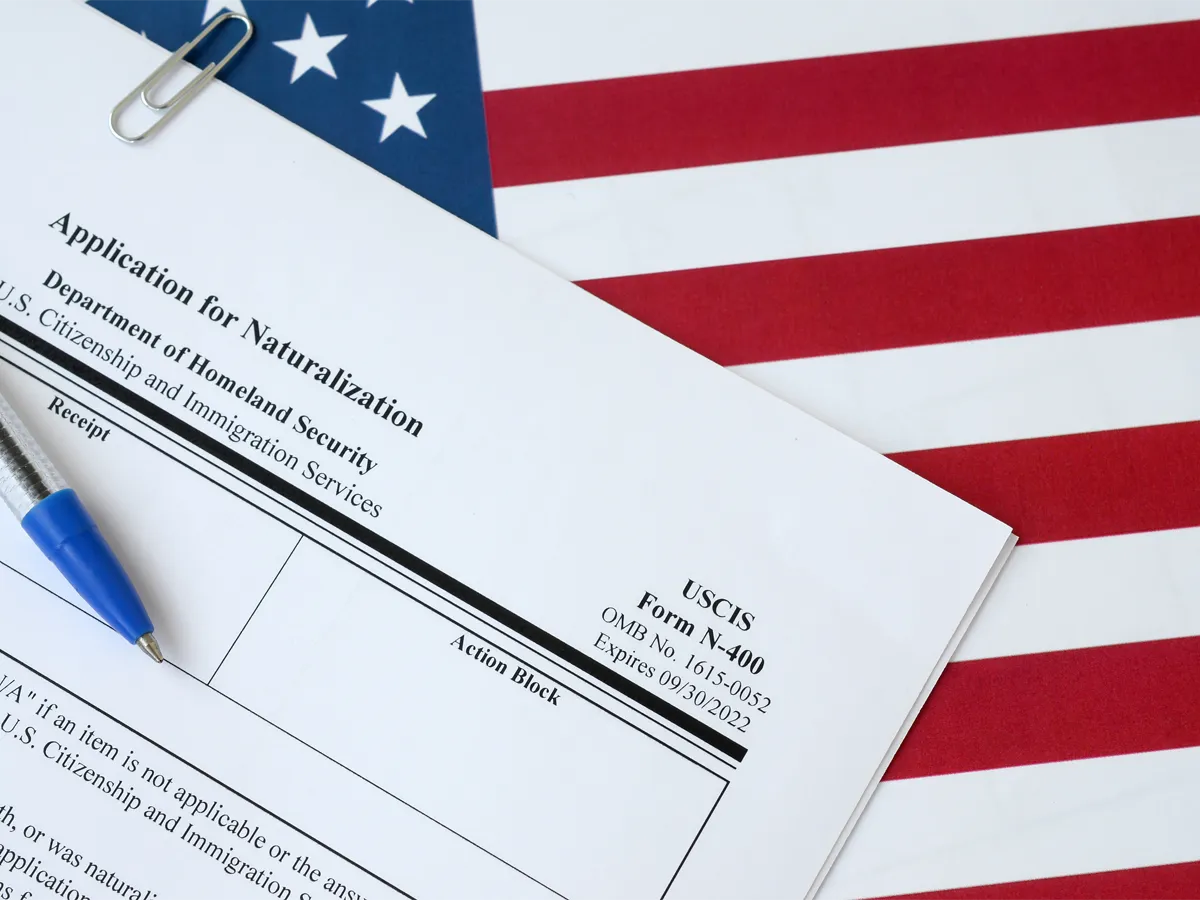
The N-400 yes or no questions are 37 background questions in Part 9 of the naturalization form that USCIS uses to decide if you qualify for U.S. citizenship. They cover criminal history, taxes, immigration violations, military service, and loyalty to the U.S. Constitution.
At first, these seem simple, requiring just “yes” or “no.” But be careful, your responses are serious— any mistakes can delay or derail your case.
USCIS officers pay close attention to your answers when reviewing your N-400 form and again during your interview.
This guide explains these questions clearly. It also includes a downloadable PDF with possible answers, so you can practice and feel confident for your interview.
What are the N-400 yes or no questions?
The “yes or no” and “have you ever” questions are the 37 questions on Part 9 of the N-400 citizenship application that determine whether you meet the naturalization requirements under U.S. law.
During the interview, an officer will ask you some of these questions to verify the information you listed on your application. It is important that your answers during the interview match what you wrote on your N-400 application.
Although these are closed questions, many of them require proof. This is common with topics such as criminal history, taxes, and child support.
In those cases, the officer may ask you to provide documents supporting your answers. You should bring those records with you to the interview.
The officer may ask all 37 questions or only a few. It depends on your case and the officer conducting the interview.
You may also be asked to define certain terms used in the questions, such as “genocide” or “prostitution.”
You do not need to provide a dictionary definition. However, you should be able to explain their meaning in your own words.
Therefore, reviewing the vocabulary in the yes or no section is an important part of your preparation.
Key topics covered in the N-400 yes or no questions
Political or extremist affiliations:
You may be asked if you were ever part of communist parties, terrorist groups, or violent organizations, even if it was many years ago.
Illegal or criminal activity:
This includes arrests, charges, convictions, or any past problems with the law. Older incidents still need to be disclosed.
Fraud or false statements:
This includes using fake documents, lying to an immigration officer, or using another identity.
Taxes:
Officers will verify that you are up to date on your taxes and that you do not owe money to the IRS.
Government Obligations:
This includes serving in another country’s military or being willing to defend the United States if required.
Oath of Allegiance:
These questions focus on your willingness to support the U.S. Constitution and carry out the duties of citizenship.
Selective Service registration:
If you were between 18 and 26 years old while living in the United States, you may be asked if you registered for the Selective Service System.
How to answer the N-400 have you ever questions
Most applicants should answer “No” to questions 1–30 because they cover crimes, fraud, tax issues, and false claims to U.S. citizenship.
If you answer “Yes” to any of them, be prepared to explain what happened and provide documentation.
There are important exceptions:
- Questions 22a and 22b deal with Selective Service registration: If you were between 18 and 26 years old while living in the United States, you were generally required to register, so your answer should be “Yes.”
- Questions 25 and 26 ask whether you served in the U.S. Armed Forces. If you did, answer “Yes.” If not, answer “No.”
Questions 31 through 37 require most applicants to answer “Yes.”
These questions cover supporting the Constitution, defending the country, and taking the Oath of Allegiance, which are basic duties of U.S. citizens.
The exception is Question 33, which asks if you have a physical or mental condition that would prevent you from taking the oath.
If you have such a condition, the correct answer is “Yes.”
Otherwise, you should answer “No.”
Our guide contains all N-400 questions with clear explanations and sample answers based on the USCIS guides. Download it and start practicing for the big day!
But the most important rule when answering “yes or no” questions of the N-400 Form is to be honest.
Do not hide information or lie. USCIS compares your records with those of other government agencies. Any inconsistencies can surface later and harm your case.
If there is an issue in your past, it is better to explain it from the start. In some cases, consulting an immigration attorney may also help you prepare.
And never submit false documents. This is a serious offense that could result in the denial of your application, criminal penalties, or even deportation proceedings.
FAQs
What questions are asked during an N-400 interview?
A USCIS officer may review your application, test your English and civics knowledge, and ask some or all of the yes/no questions from the N-400 form during the interview.
You may be asked about:
- how long have you lived in the U.S.
- when and how you entered the country,
- your permanent resident status,
- your travel outside the U.S.,
- your employment and taxes,
- your marital history,
The goal is to confirm that the information in your application is accurate and that you are eligible for naturalization.
Do officers ask all N-400 yes or no questions during the interview?
Not always. Some applicants are asked only two or three questions, while others are asked ten
or even all 37 questions. It depends on your case and the officer.
If your file is clear and well-documented, the officer may only focus on the most relevant questions. Nevertheless, you should review and practice answering all of them.
What should you do if you make a mistake on your N-400 application?
If you notice an error after submitting your N-400, inform the USCIS officer during your interview or send a written correction to the office handling your case.
Is it hard to pass a U.S. citizenship interview?
Usually not. If you meet the requirements, bring the correct documents, and pass the English and civics tests, you will likely pass.
Conclusion:
As you can see, the N-400 yes/no questions are not as simple as they seem.
USCIS uses them to review your background, moral character, and readiness to become a U.S. citizen. This is why this section should be part of your study plan.
Start practicing today.
With Citizen Now, you can prepare for everything that will happen on interview day, including the civics test, the reading and writing sections, and the N-400 questions.
Download Citizen Now today and begin your path to citizenship with confidence.
Thank you officer for the good reason
Hi, Verline
We’re glad you found the explanation helpful! If you’d like, you can explore more resources here on Citizen Now to stay informed and prepared.